DM Workbench

Features

Build your world, prep your sessions, run the table.

The prep tools come first, then the screens you use on game night.

The canvas

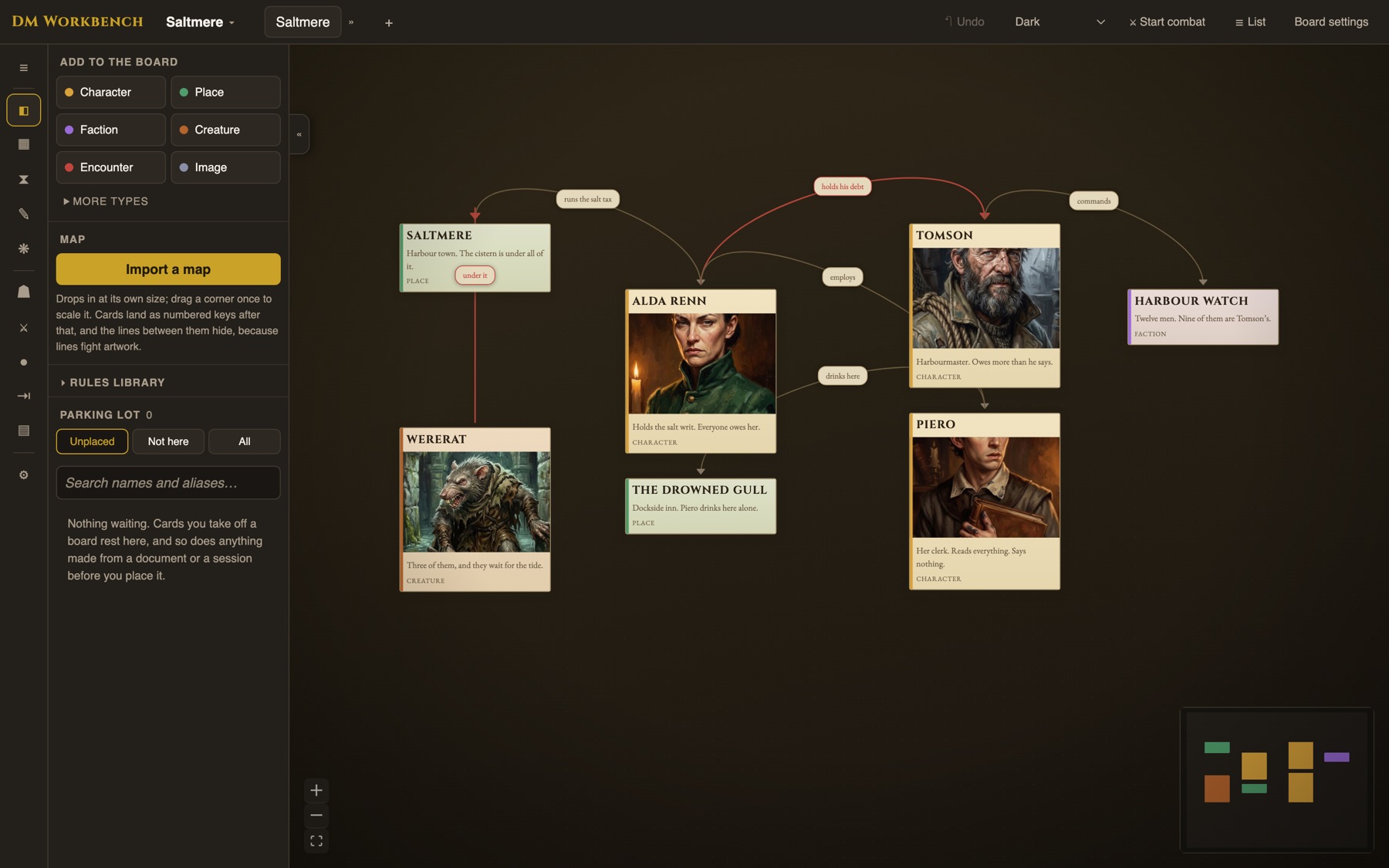
Your whole campaign on one board.

1

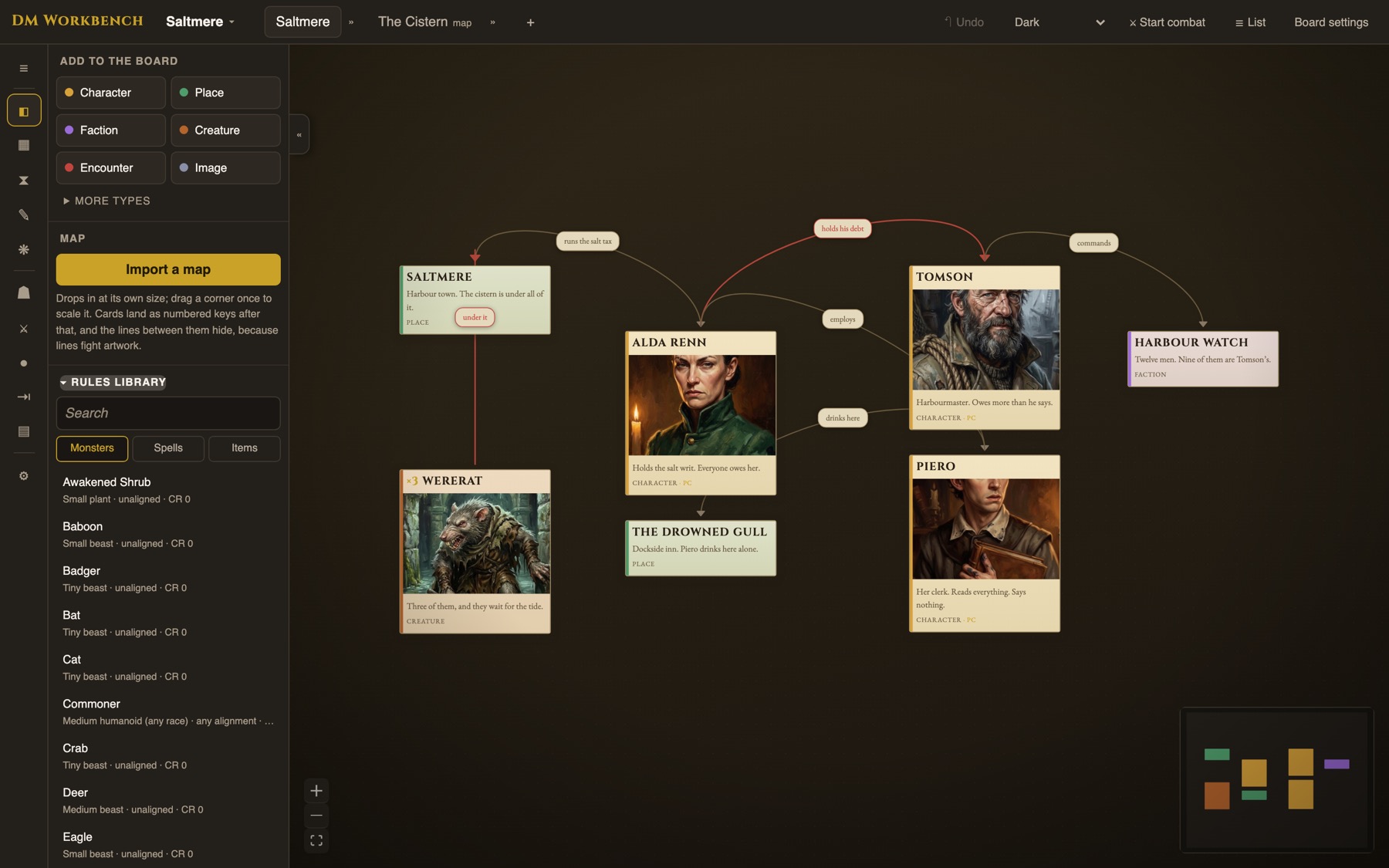
Thirteen card typesCharacter, place, faction, item, event, creature, encounter, mechanic, handout, read-aloud, note, picture and nested board.

2

Write on the line itself“Boyhood rivals, Tomson hates Mortimus” says more than either card it joins. A hostile line draws red.

3

Rearrange without fearCards live in the campaign. Taking one off a board deletes nothing.

4

Boards nestAny card can open one. Saltmere the place opens Saltmere the map.

A board of linked cards
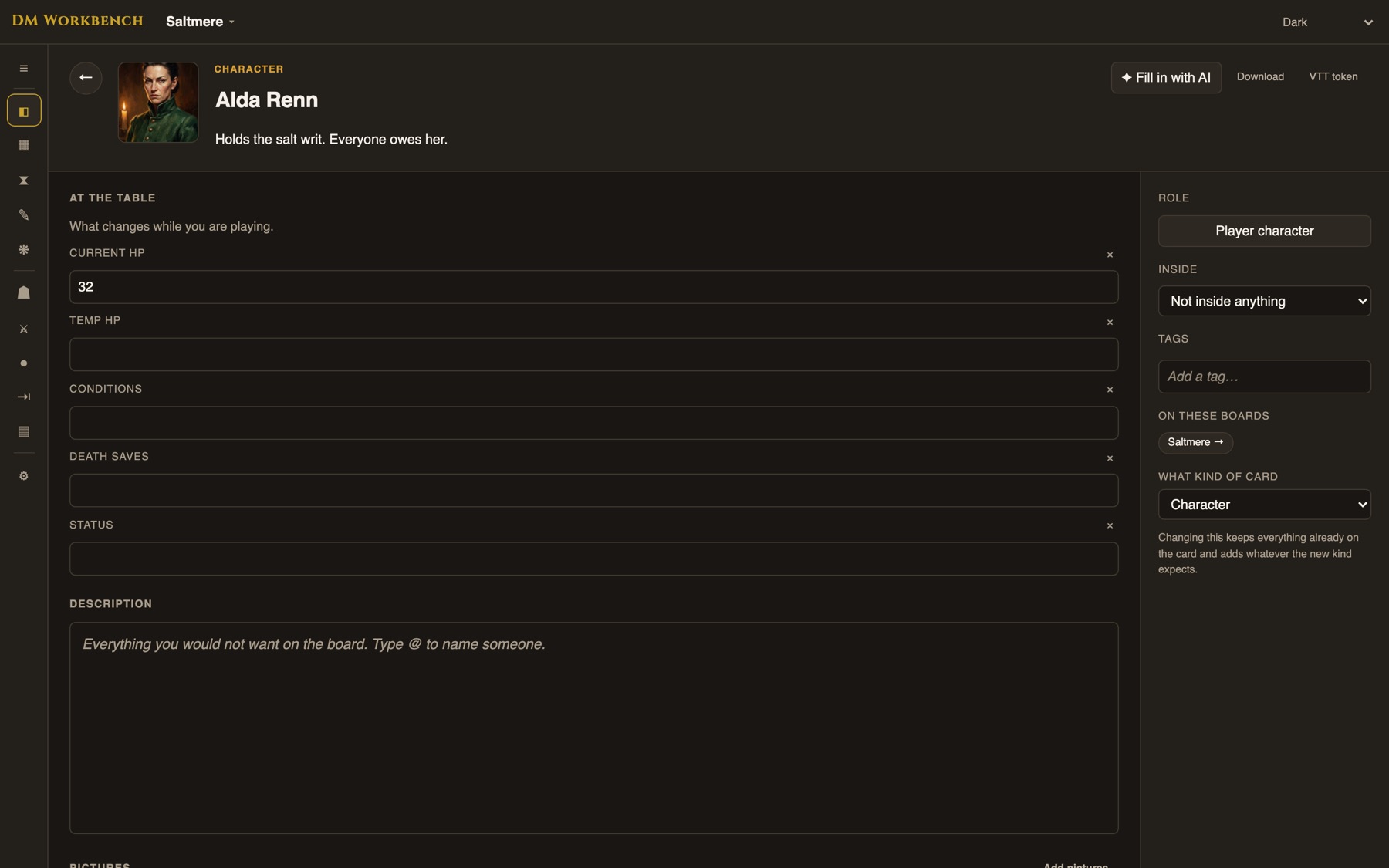
A character’s document

The card, opened

Behind every card, a document.

1

Rename once, it updates everywhereType @ to mention any card. Rename Algernon and every sentence he appears in follows.

2

No retypingA faction lists its members and enemies automatically. A place lists what is inside it. A character gets the system’s sheet.

3

Names become connectionsAnyone mentioned with no line on the board yet is offered as a one-click connection.

Brainstorm

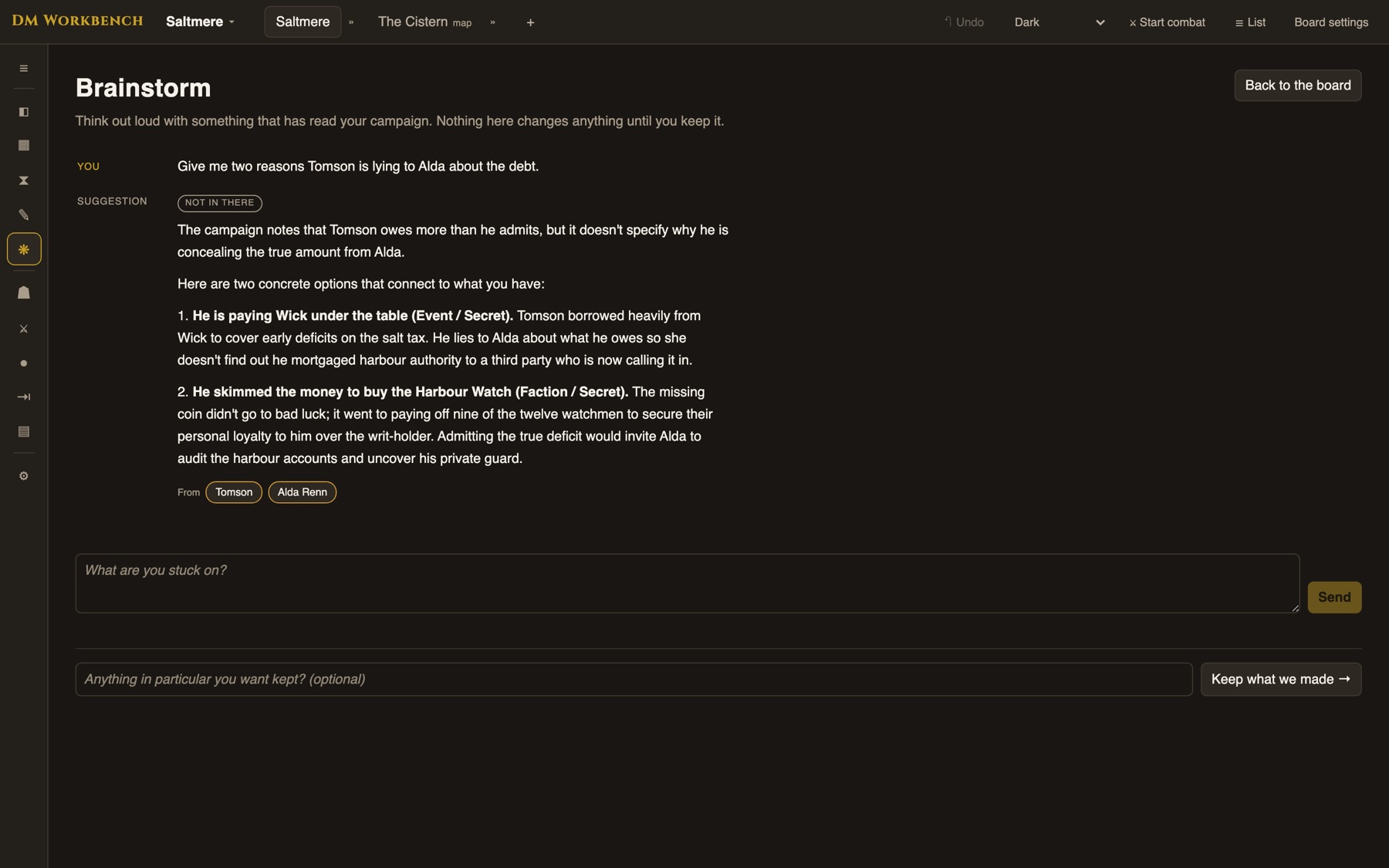
Brainstorm with an AI agent that knows your campaign.

1

Answers show their cardsA sentence resting on your campaign carries chips for the cards it rests on. An invention carries none.

2

“Not in there” is an answerWhen the campaign does not say, it tells you that instead of making something up.

3

Nothing writes until you keep itCommitting produces a list you tick through. Cards made this way are ordinary cards.

Brainstorm answering with citations
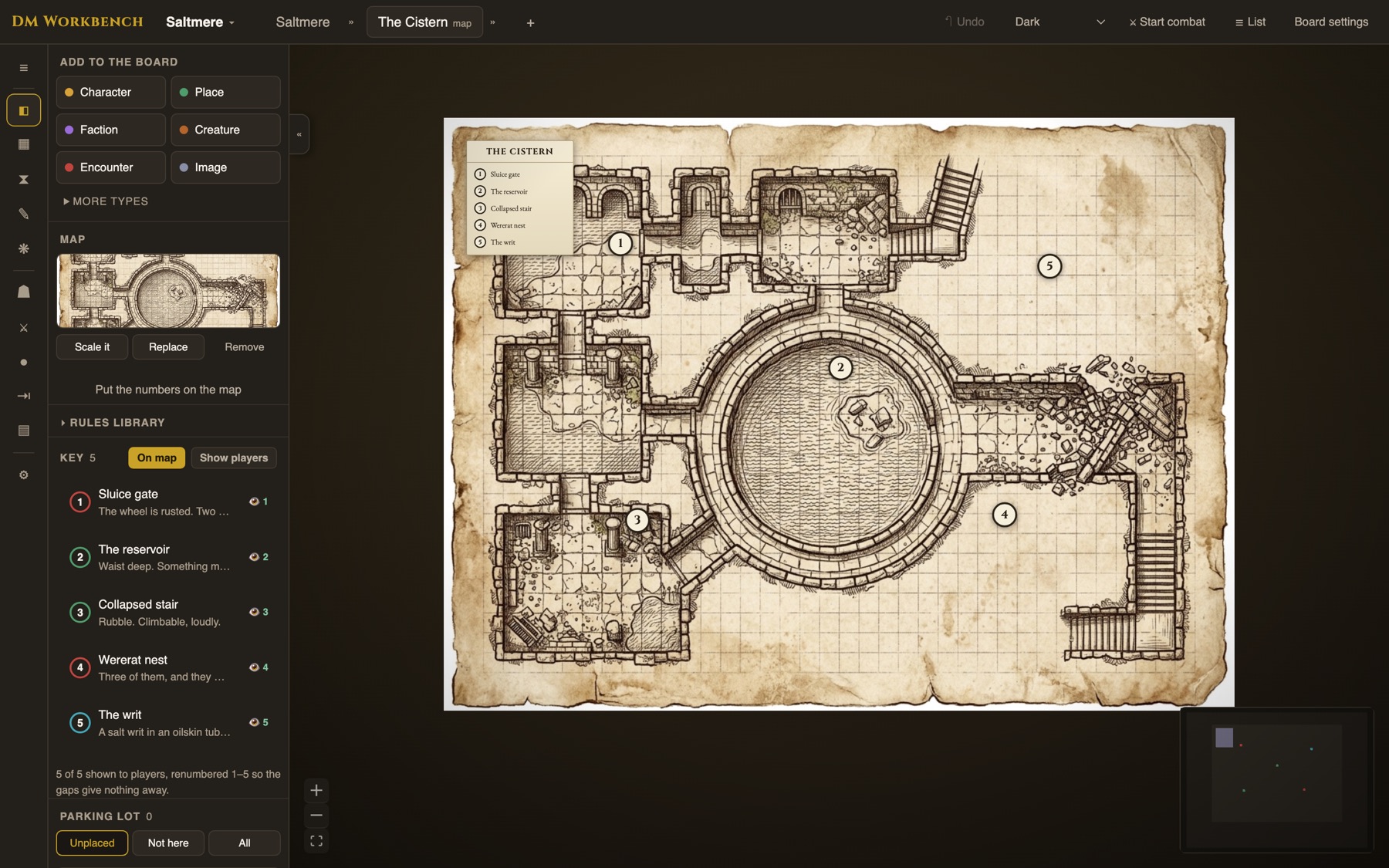
A keyed map with a legend

Maps

Make your maps interactive.

1

Every room is a pinOpen a pin and the room’s card is right there. The legend can sit on the map itself.

2

Lettering that looks the partRegion, settlement and wilderness labels, set in your campaign’s typefaces.

3

Works when the wifi does notThe lettering travels with the map, so it survives the venue’s connection.

Rules libraries

Seven rules libraries, one drag away.

Drag a monster onto the board and its full statistics come with it. A goblin’s statistics follow it into each campaign you run.

SystemMonstersSpellsEquipment
D&D 5.1 SRD334319237
D&D 5.2 SRD331339182
Pathfinder 2e1,2091,4604,121
Starfinder 2e243419453
Tales of the Valiant360316552
Basic Roleplayingthe engine behind Call of Cthulhu7496193
Blades in the DarkForged in the Dark SRD42 abilities · 12 actions

Only openly licensed content ships.

The rules library in the rail
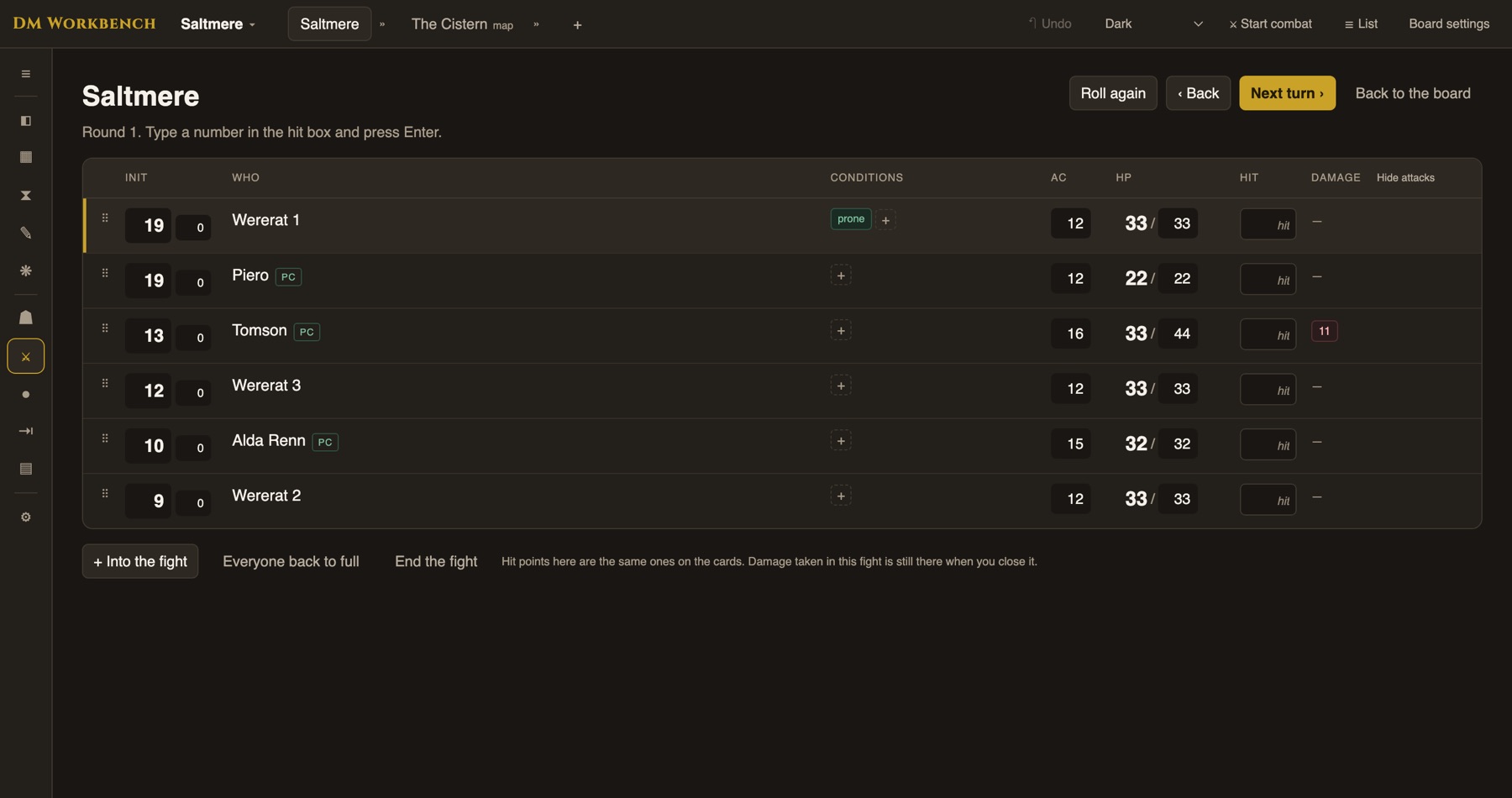
The initiative tracker mid-fight

At the table

Faster fights, less bookkeeping.

1

Damage is a logType the number you heard and the total updates. Entered the wrong number? Delete that entry and the total corrects itself.

2

Turn order keeps itselfRoll initiative once and the tracker holds the order, round after round.

Session recording

Record the session, get the write-up.

1

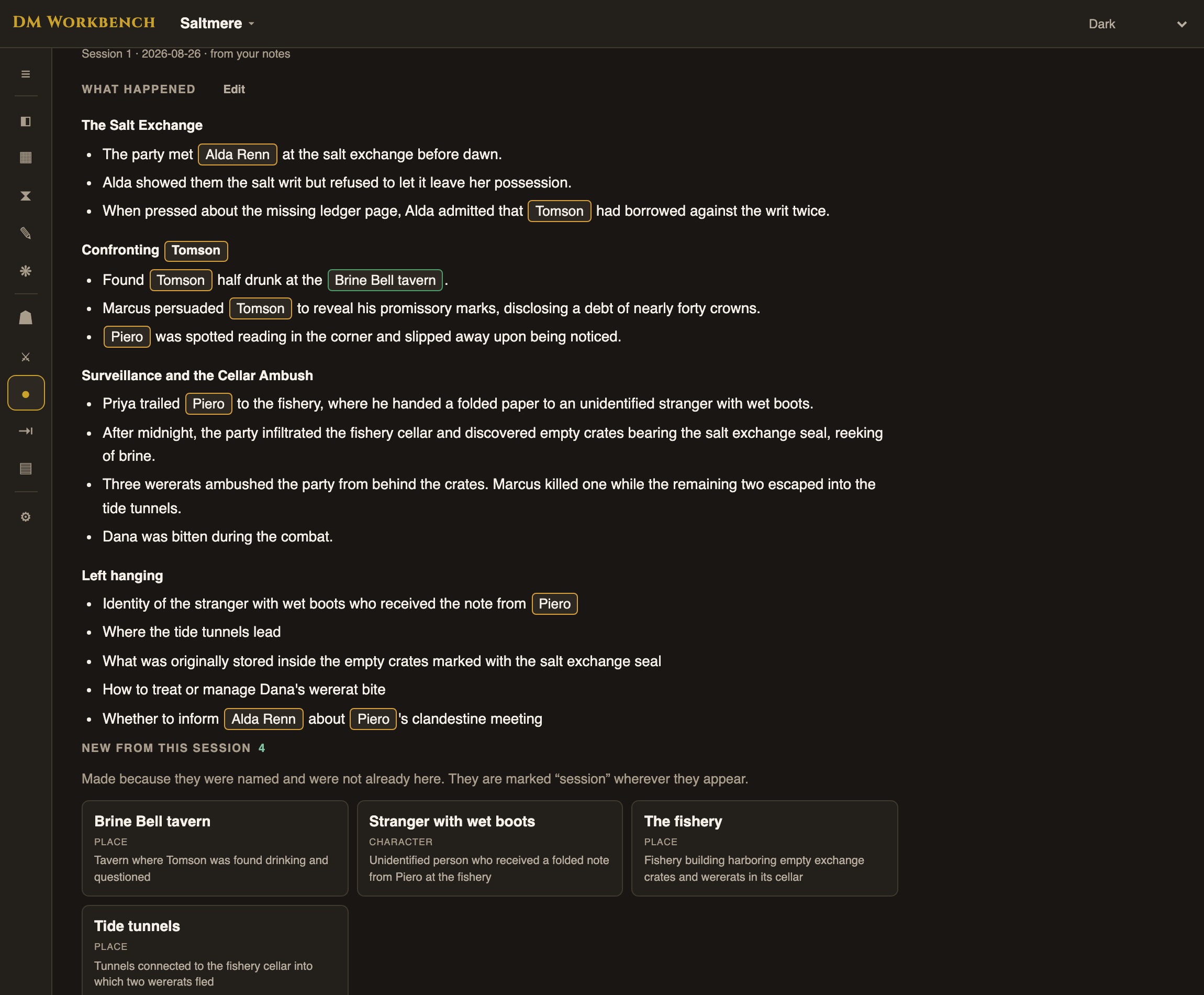
The night, organizedWhat happened in sections, and the loose ends to chase next week.

2

Names match your cardsEvery name is matched against your campaign, never invented. Anyone named for the first time comes back as a new card, marked as the session’s.

3

No recording neededPaste written notes or a transcript and get the same write-up.

A session write-up with matched cards

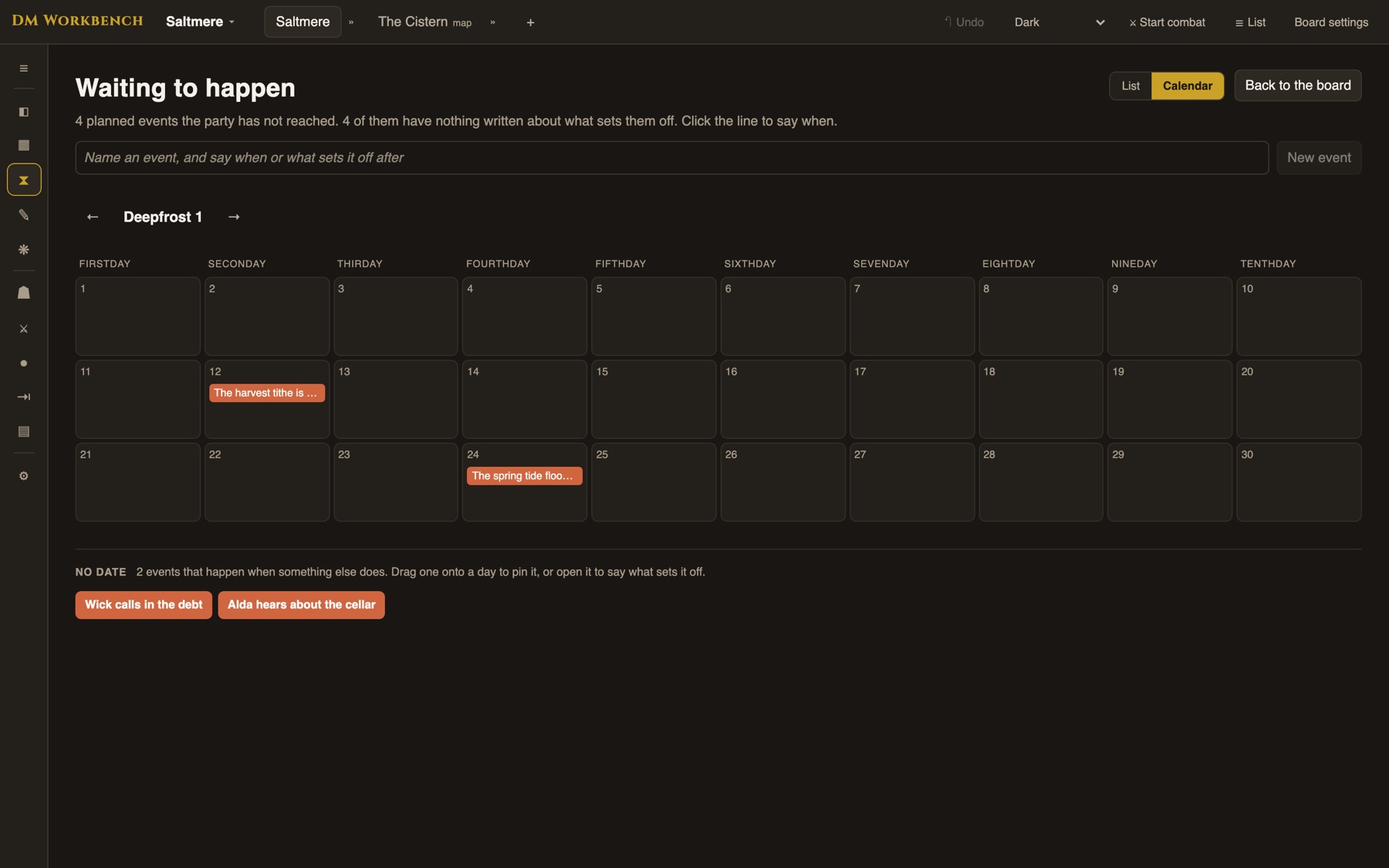
Waiting to happen

A calendar built for your world.

“You cannot have a meaningful campaign if strict time records are not kept.” Gary Gygax said it; the calendar keeps them for you. Use a fantasy calendar of your own creation, or start from one inspired by popular fantasy games and novels: a thirty-day twelvemonth with festival days and a ten-day week, thirteen moons of twenty-eight, ten long months of thirty-six. Events can be triggered by PC actions or placed on the calendar.

The campaign calendar with the undated tray
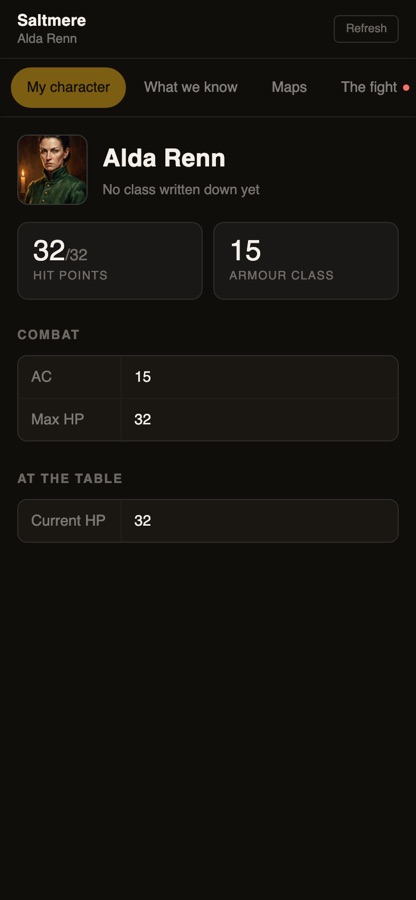
A player’s own character sheet
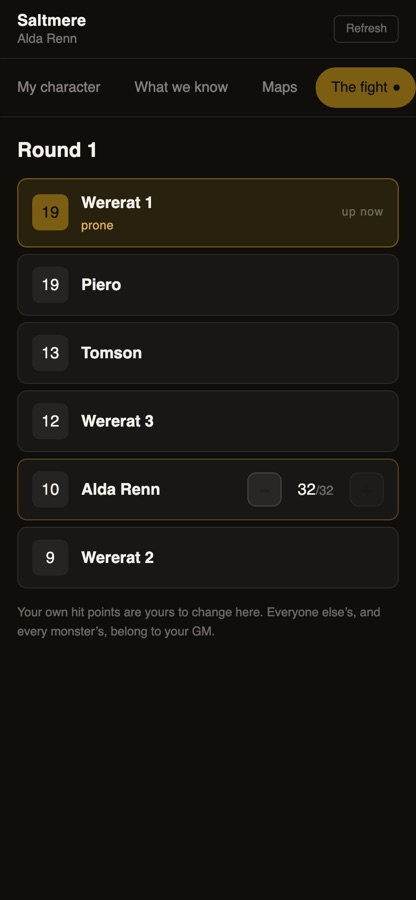
The fight, as a player sees it

The player’s phone

Every player gets a link. No account, no password.

1

Their sheet, in fullWith their hit points to manage in a fight. Nobody else’s.

2

What the party has been toldRevealed cards, maps and handouts file into their journal. Your prep notes never travel.

3

Fast on table wifiLoads while you are mid-sentence, on whatever connection the venue has.

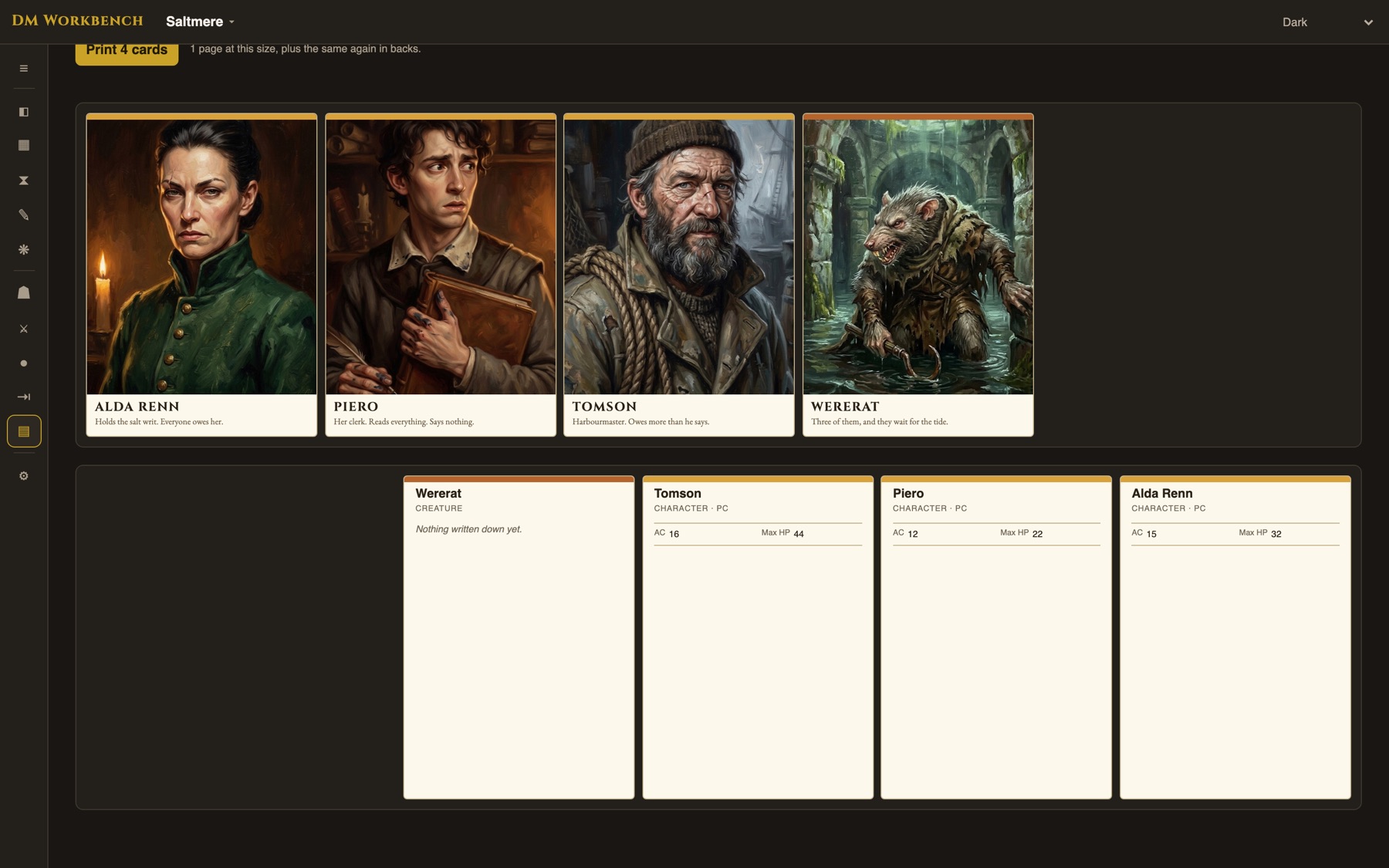
Cards you can hold

Print the deck and deal it out.

Four sizes on US Letter or A4, through the browser’s print dialog. The front is a face, a name and one line. The back carries the numbers and the longer description. Print double-sided and each back matches its front.

Printable cards, fronts and backs