The demo
Watch a campaign get built.
The real app: importing a module, connecting the canvas, and running the table.
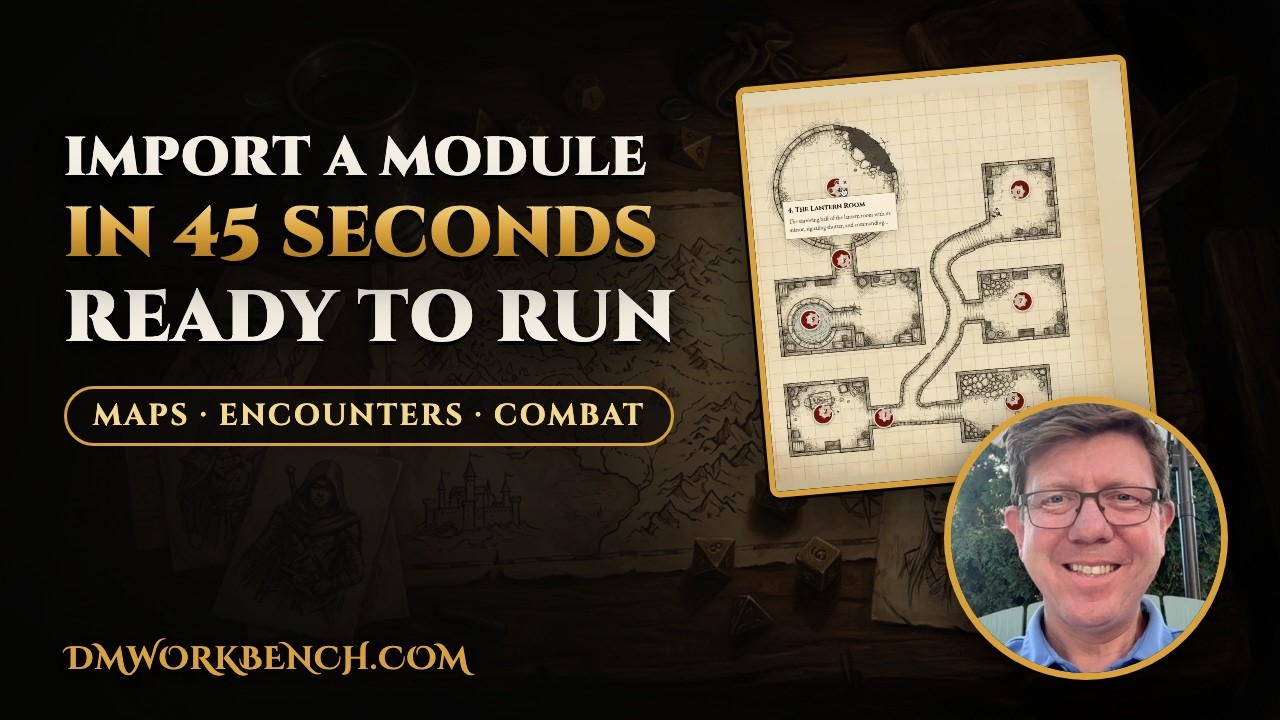
Visualize your world, create encounter flows, brainstorm devious plot hooks and make your maps interactive. With DM Workbench, game prep becomes just as intuitive and fun as the adventure at your table.
No card required to start planning your next session or campaign.
The demo
The real app: importing a module, connecting the canvas, and running the table.
The week before
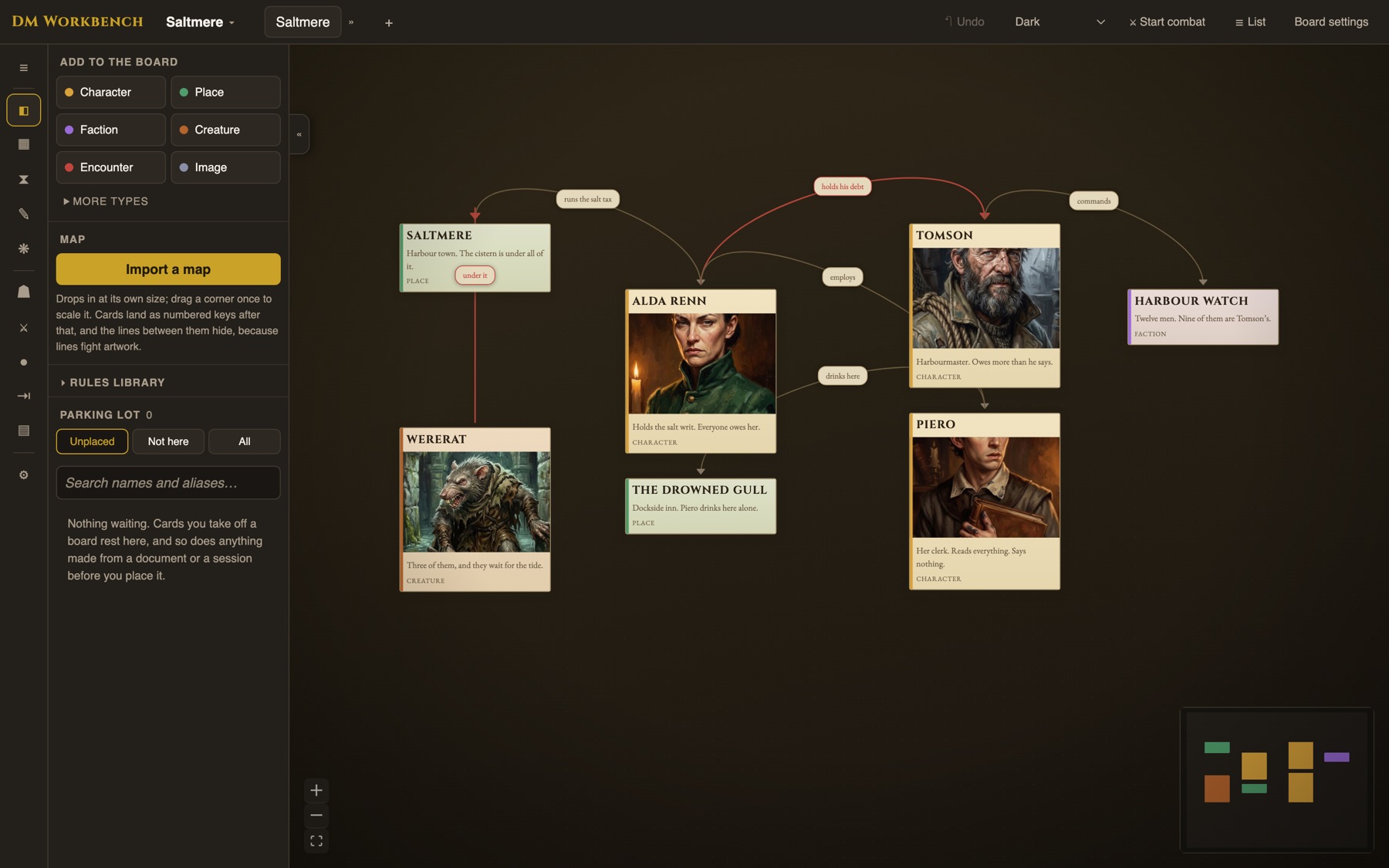
Every character, place, faction and plot thread goes on one canvas, connected the way you imagine them. Drag a line from one card to another and write what ties them together. No wiki to build, no folders to file. The story stays in front of you.
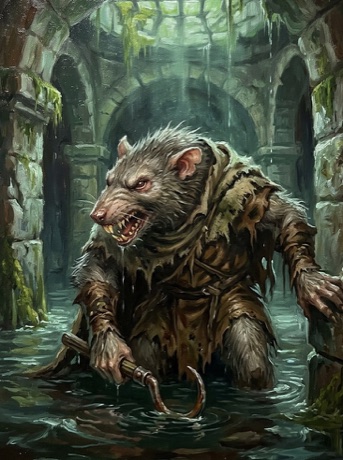
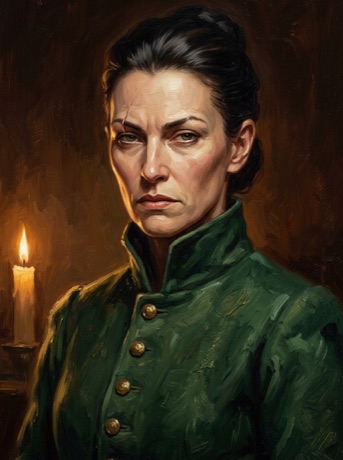
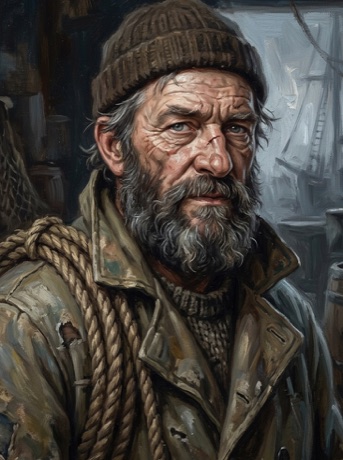
One corner of a world, taking form. Every line is a thread your players can pull.
A mind map purpose-built for tabletop gaming and storytelling
Sixteen card typesCharacters, places, factions, items, events, creatures, encounters, mechanics, handouts, read-aloud text, DM notes, story hooks, reference tables, notes, pictures and nested canvases.
Write on the linesFree text on any connection, plus a tone. A hostile line draws red, so you can take in a board at a glance.
Half-formed ideas wait safelyA thought you’re not sure of yet stays beside the canvas until it earns a place. Nothing gets lost.
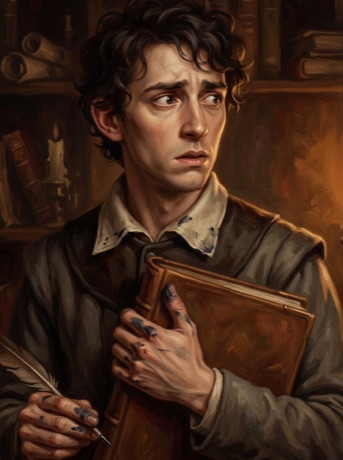
Art on every card
Bring your own art, keep what an imported module carries, or generate a portrait in the app. AI is a choice, never a requirement: the prompt is shown first, in a box you can rewrite, and nothing is sent until you press the button.
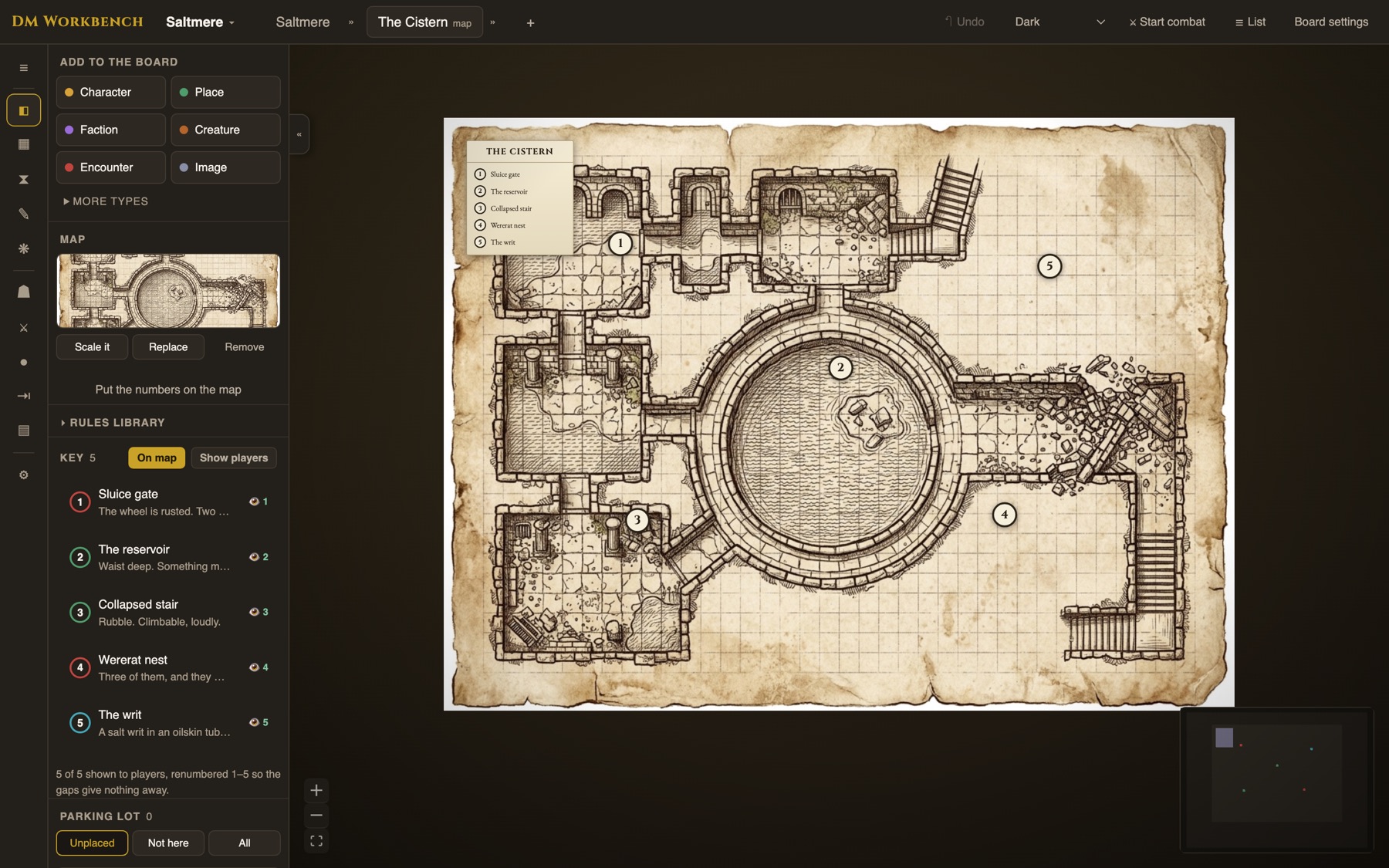
Module import
The whole adventure arrives ready to explore: every character connected, every encounter in order, every dungeon level laid out with its rooms in place.
The map runs the dungeonEvery keyed room is a numbered pin on the map. Open a pin and the room’s card is right there, so you never flip pages mid-encounter.
Spoiler-safe player mapsPlayers see only the rooms they’ve found, renumbered from 1 so the gaps give nothing away.
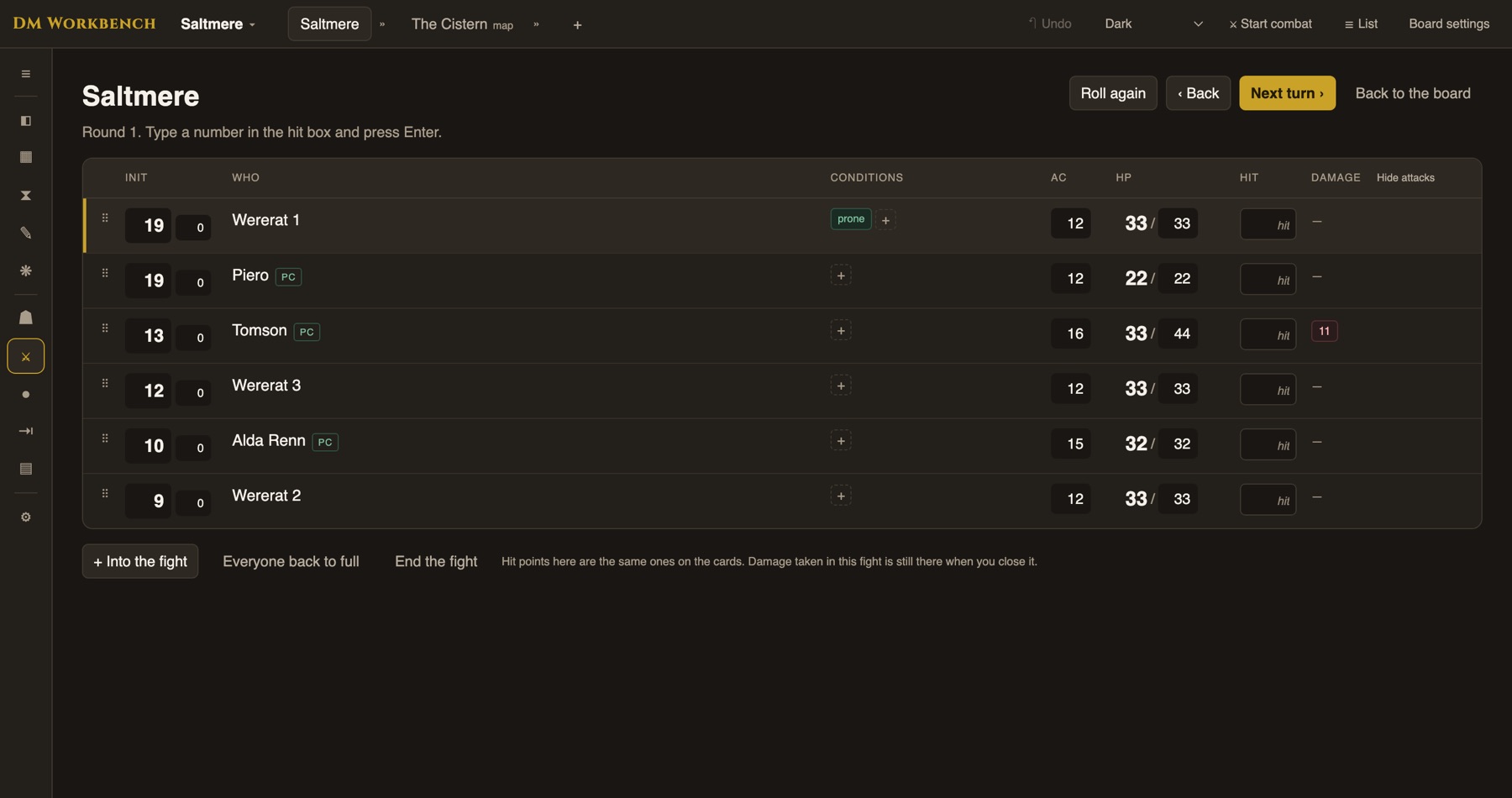
Roll for initiative
Type the number you heard and the totals take care of themselves. You run the fight; the tracker does the math.
Player viewKeeps players in the loop without giving away what’s behind the DM screen.
Seven rules librariesD&D 5.1 and 5.2 SRD, Pathfinder 2e, Starfinder 2e, Tales of the Valiant, Basic Roleplaying, Blades in the Dark.
Pricing
Cards, canvases, maps, relationships, events, party rosters and the rules libraries have no cap on any plan. Four AI-powered things are metered. Built for dungeon masters, from your first campaign to prep as a profession.
Every paid tier has a 14-day trial that needs no card. See the full meters.
Most DMs keep their world in scattered notes and one long document that gets harder to navigate every week. Bring every idea into one visual place: drill into the smallest detail of your story, or pull back and see your whole world in a single view. The imagination is yours. The workbench keeps up.